

The holiday season isn’t just about spreading joy – it’s also one of the most lucrative times for creative entrepreneurs. Christmas crafts represent a multi-billion dollar market, with consumers eagerly searching for unique, handmade decorations and gifts that mass retailers simply can’t provide.
Whether you’re looking to generate extra income or build a full-time craft business, the demand for diy Christmas decorations and handmade ornaments peaks between October and December. This comprehensive guide reveals which Christmas craft ideas actually sell, how to price them profitably, and where to market your creations for maximum visibility.
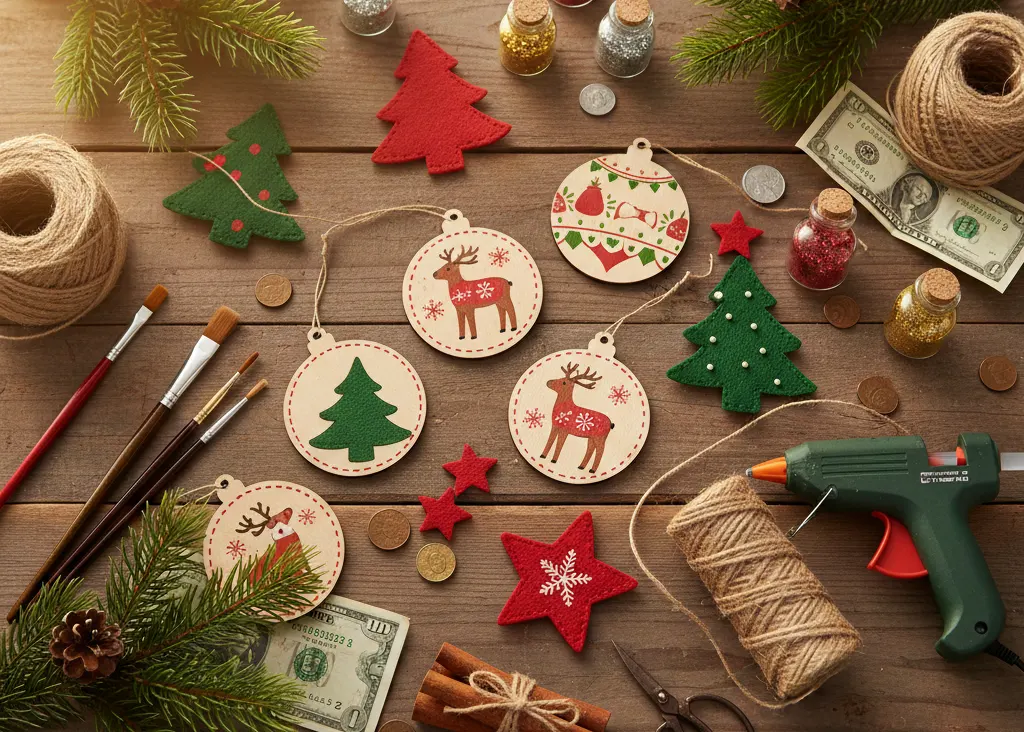
Why Christmas Crafts Are the Perfect Passive Income Opportunity
The beauty of seasonal crafts lies in their predictable demand cycle. Unlike other business models that require year-round inventory management, Christmas crafts to sell offer a concentrated revenue window with exceptional profit margins. Handmade items command premium prices—often 3-5x material costs—because customers value the artisanal quality and uniqueness.
According to market research, the handmade craft industry grows by 12% annually, with holiday-themed items driving the majority of Q4 sales. Sellers who establish their brand during one holiday season typically see repeat customers year after year, creating a sustainable passive income stream that compounds over time.
Key Insight: Successful craft sellers don’t just make products—they solve specific problems. Parents need holiday crafts for kids to keep children entertained during winter break. Homeowners want budget-friendly diy Christmas decorations that look expensive. Gift-givers seek Christmas ornaments homemade with personal touches that store-bought items lack.
Top-Selling Christmas Craft Ideas for Maximum Profit
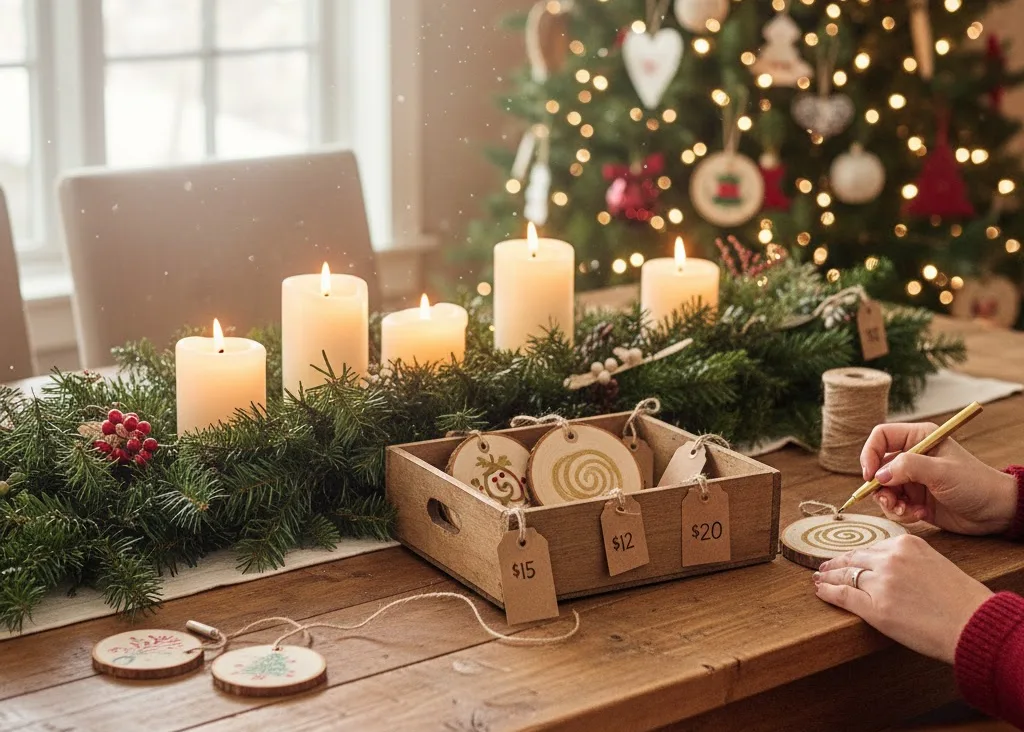
Premium Ornament Collections
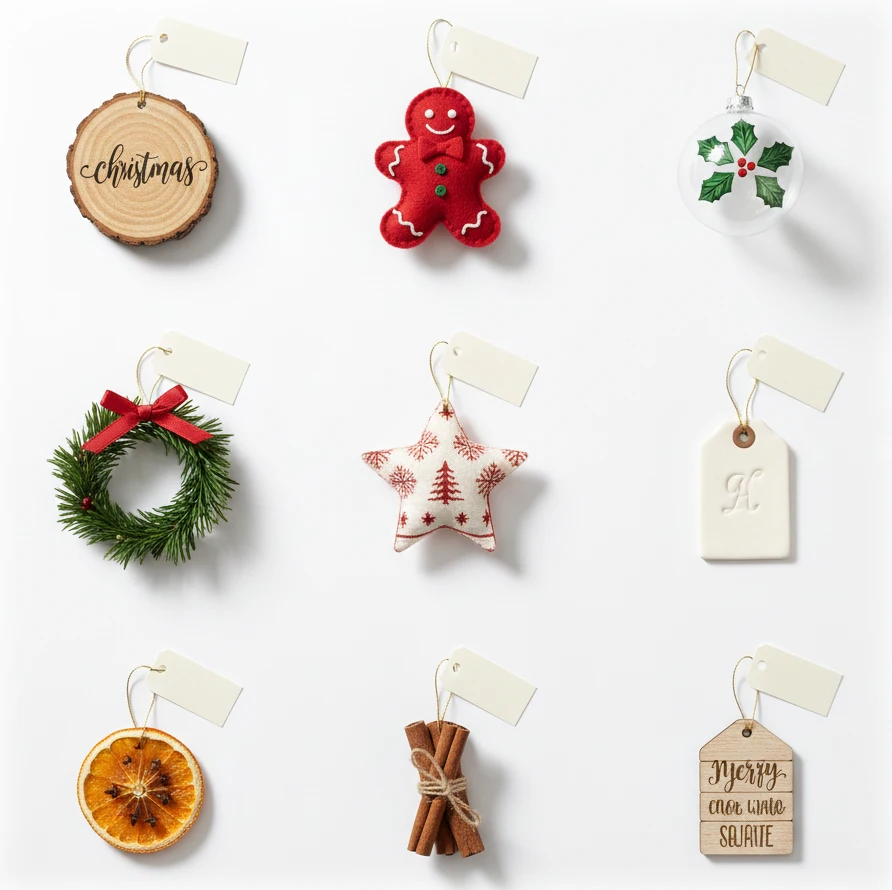
Christmas ornaments homemade from quality materials consistently rank among the highest-margin products. Consider these proven sellers:
Personalized Wood Slice Ornaments – These rustic designs appeal to farmhouse decor enthusiasts and can be customized with names, dates, or family photos. Material cost: $0.50-$1.00 per ornament. Selling price: $8-$15 each.
Hand-Painted Glass Ball Ornaments – Transform plain glass ornaments with intricate designs, metallic accents, or custom color schemes that match specific decorating themes. The transparent nature creates visual depth that photographs beautifully for online sales.
Felt and Fabric Ornaments – These lightweight, unbreakable options particularly appeal to families with young children or pet owners who worry about shattered glass. Sewn details and embroidery add perceived value.
DIY Christmas Decorations That Sell Fast
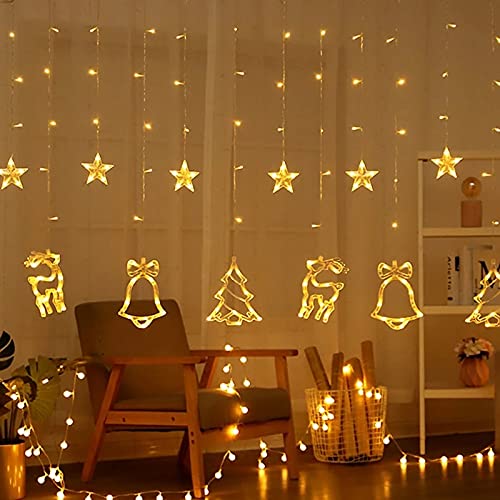
Festive Wreaths and Door Hangers – Fresh or preserved materials create statement pieces for entryways. Evergreen wreaths with dried orange slices, cinnamon sticks, and pinecones tap into the popular “natural Christmas” aesthetic. Size matters here—larger wreaths (20-24 inches) justify higher price points of $45-$75.
Table Centerpieces and Candle Arrangements – These Xmas crafts solve a specific entertaining need. Wooden boxes filled with seasonal greenery, battery-operated candles, and decorative elements create Instagram-worthy tablescapes. Pro tip: Create “refill kits” so customers can refresh the greenery annually while keeping your container.
Advent Calendars – Reusable fabric or wooden advent calendars command premium prices ($60-$120) because they replace disposable versions year after year. The key is creating pockets or drawers sized for small treats or toys rather than specific candies.
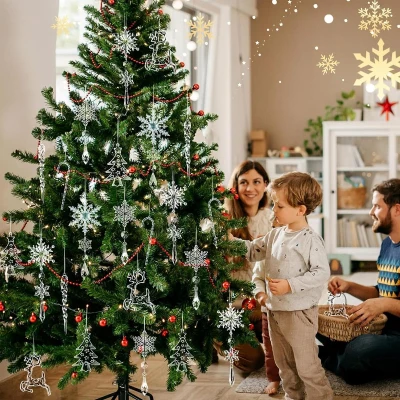
Holiday Crafts for Kids: The Subscription Opportunity
Parents constantly search for holiday crafts for kids that are actually age-appropriate and genuinely engaging. This creates a unique passive income opportunity through craft kit subscriptions or bundles.
Pre-Packaged Craft Kits include all materials and clear instructions for projects like ornament decorating, gingerbread house construction alternatives (using graham crackers or cardboard), or snowflake creation stations. The subscription model generates recurring revenue—parents pay upfront for weekly craft activities delivered throughout December.
Virtual Craft Classes paired with mailed supply kits create a hybrid product that leverages your expertise without requiring your physical presence for each transaction. Record the class once, sell it hundreds of times.
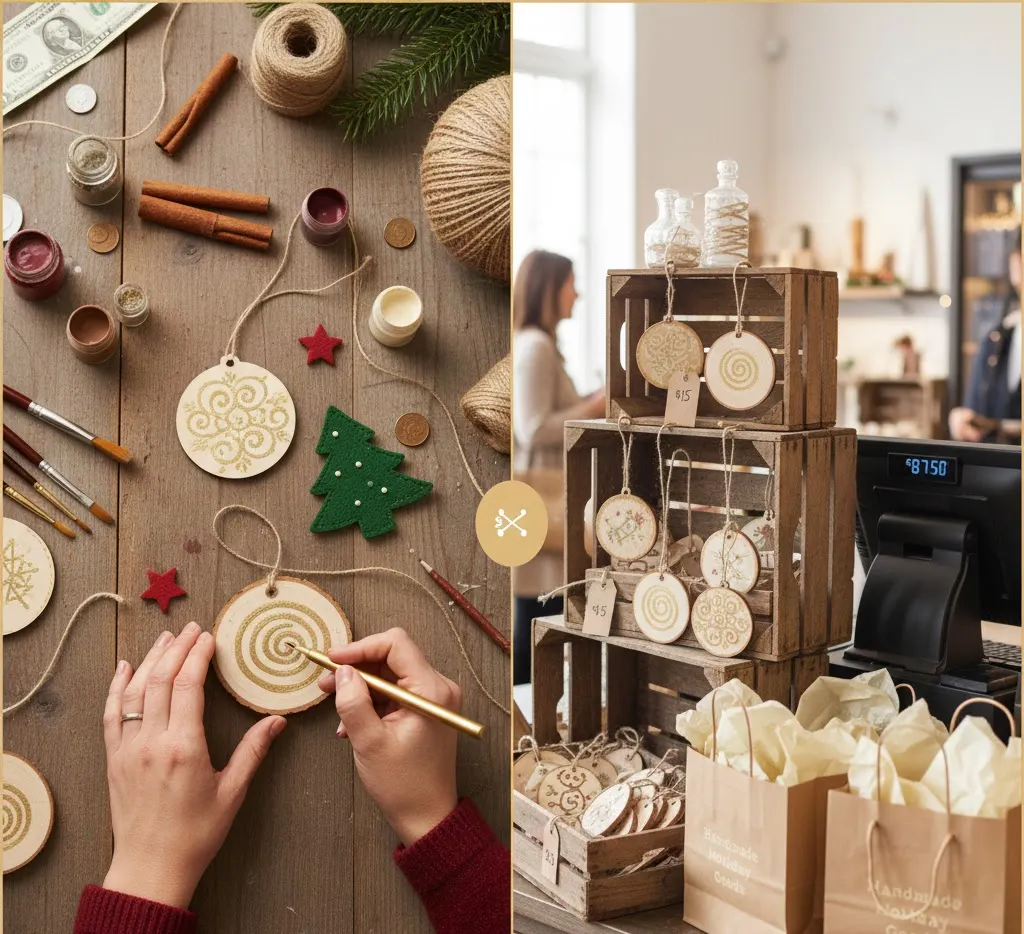
Strategic Pricing for Christmas Crafts to Sell
Underpricing handmade items is the most common mistake new craft sellers make. Your pricing should account for materials, time, overhead, and profit margin. Use this formula:
(Material Cost × 3) + Hourly Rate + 10-15% Profit Margin = Wholesale Price
Wholesale Price × 2 = Retail Price
For direct-to-consumer sales through craft fairs, Etsy, or social media, use the retail price. When selling wholesale to boutiques or gift shops, use your wholesale calculation.
Example: A hand-painted wooden sign requires $8 in materials and takes 2 hours at your desired $20/hour rate. ($8 × 3) + $40 + $6.40 profit = $70.40 wholesale or $140.80 retail. Round to $75 wholesale / $145 retail.
Don’t apologize for premium pricing. Customers seeking handmade goods understand they’re paying for craftsmanship, not mass production. Your marketing should emphasize the value—”heirloom quality,” “one-of-a-kind design,” “supports local artisan.”
Where to Sell Christmas Craft Ideas for Maximum Visibility
Online Marketplaces
Etsy remains the dominant platform for handmade goods, with built-in holiday shopper traffic. Optimize listings with all seven secondary keyword variations in titles, tags, and descriptions. Professional photos with lifestyle staging (showing items in decorated homes) dramatically increase conversion rates.
Amazon Handmade offers access to Prime customers willing to pay premium prices for fast shipping. The application process is selective, positioning accepted sellers as vetted artisans.
Instagram and Facebook Shops allow direct selling without marketplace fees. Use holiday hashtags (#christmascrafts, #diychristmasdecorations, #handmadeornaments) to reach organic audiences. Stories and Reels demonstrating your creation process build authentic connections that drive sales.
Local Opportunities
Holiday Craft Fairs and Markets provide face-to-face selling opportunities with no shipping logistics. The most successful vendors treat their booth as a branded experience—cohesive signage, product demonstrations, and email list collection for future seasons.
Consignment with Local Boutiques puts your products in front of customers who prefer supporting local businesses. Boutique owners typically take 30-40% commission but handle all customer service and transactions.
Corporate Gifting Programs represent an often-overlooked revenue stream. Companies buying 50-100 customized ornaments or décor items for employee gifts provide bulk orders at premium prices.
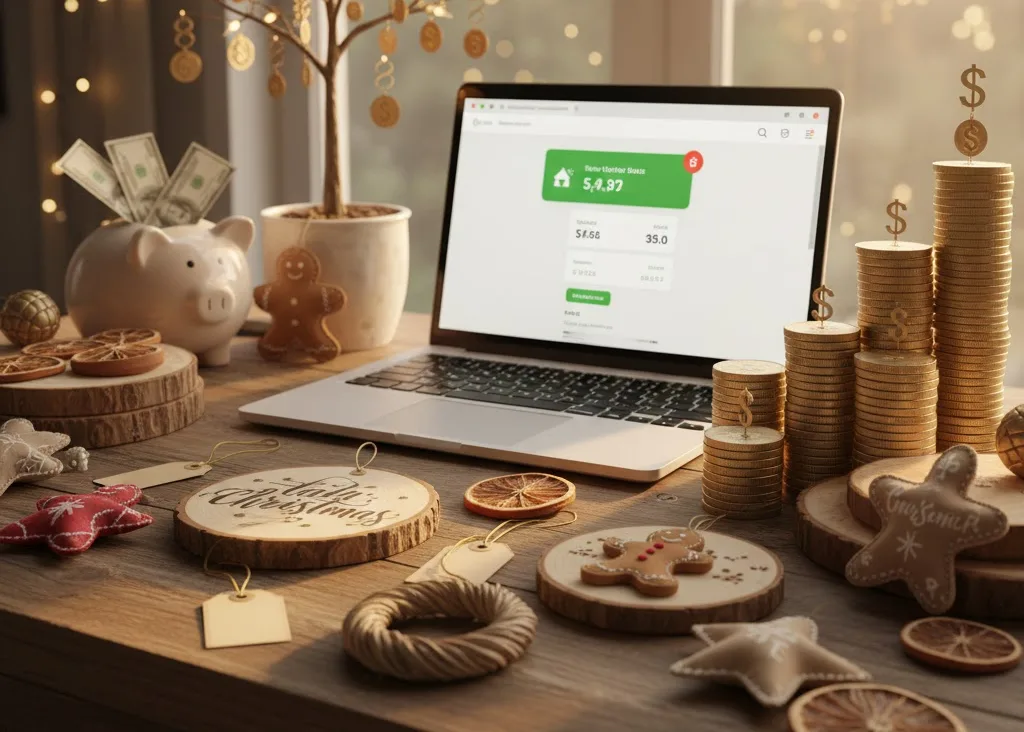
Creating Production Systems for Passive Income
True passive income from christmas crafts requires systematizing your production. These strategies separate hobbyists from profitable craft businesses:
Batch Production – Instead of completing one item start-to-finish, break projects into stages. Cut all wood pieces in one session, paint all items in another, add hardware in the final stage. This assembly-line approach can triple your hourly output.
Template and Pattern Libraries – Create reusable templates for consistent sizing and design replication. This reduces planning time for each piece and ensures quality consistency across your product line.
Pre-Made Components – Purchase pre-cut wood shapes, pre-made bows, or standard hardware rather than crafting every element from raw materials. Your time is better spent on the custom details that justify premium pricing.
Digital Product Integration – Sell downloadable patterns, tutorial videos, or design templates alongside physical products. Once created, digital products generate income without additional production time or material costs.
Marketing Christmas Ornaments Homemade and Other Crafts
Your marketing should start in August or September, well before customers begin holiday shopping. Early bird shoppers want first selection and are willing to pay full price rather than waiting for potential discounts.
Content Marketing Strategy – Publish blog posts, Pinterest pins, and social media content showing your creations in styled settings. Focus on searchable terms like “unique christmas ornaments” or “farmhouse christmas decorations” rather than just product names.
Email Sequence for Repeat Customers – Previous buyers represent your highest-value audience. Send sneak peeks of new designs, early access to limited collections, or exclusive discount codes to reward loyalty.
User-Generated Content – Encourage customers to share photos of your crafts in their homes with a branded hashtag. Repost this content (with permission) to build social proof. Potential customers trust peer recommendations over brand marketing.
Seasonal Collaborations – Partner with complementary businesses for cross-promotion. A wedding photographer might promote your ornaments as client gifts; you recommend their services for holiday card photos. Both businesses access new audiences without advertising costs.
Scaling Beyond Holiday Crafts for Kids and Seasonal Items
The most sustainable craft businesses use holiday momentum to build year-round revenue streams:
Evergreen Product Lines – Adapt your best-selling Christmas craft ideas into non-seasonal versions. Those popular wooden signs can feature inspirational quotes, family names, or seasonal decor for spring and summer.
Customization Services – Offer personalized versions of standard products at higher price points. A $25 standard ornament becomes a $45 custom piece with a name and date—minimal additional work for 80% more revenue.
Wholesale Accounts – Landing ongoing wholesale relationships with gift shops provides consistent orders beyond the holiday season. One wholesale client ordering monthly can provide baseline income while you develop new product lines.
Workshop and Class Revenue – Your expertise has value beyond finished products. Teach others your techniques through in-person workshops ($45-$75 per person) or online courses ($97-$297 for comprehensive training). This educational content generates income whether you’re actively creating products or not.
Getting Started With Your Christmas Craft Business
The barrier to entry for xmas crafts is remarkably low—most people can start with under $200 in supplies and equipment they already own. The key is starting small, validating demand, then scaling what works.
Week 1-2: Research best-selling items in your preferred categories. Order samples of materials and test your production process. Calculate accurate pricing including all costs.
Week 3-4: Create 15-20 finished products. Photograph them professionally—natural lighting, clean backgrounds, and lifestyle staging make even simple crafts look premium.
Week 5-6: List products on your chosen selling platforms. Share launch announcements across social media channels and with your personal network.
Week 7-8: Analyze which items sell fastest and gather customer feedback. Adjust your product mix and production priorities based on actual data rather than assumptions.
The most successful craft sellers treat their creative work as a legitimate business from day one—tracking expenses, maintaining inventory systems, and following basic accounting practices. This foundation allows you to scale when demand increases rather than scrambling to catch up.
Ready to transform your creative skills into a profitable passive income stream? Visit GreatInspire for more comprehensive guides, business templates, and strategies for building sustainable creative businesses that generate income year after year.